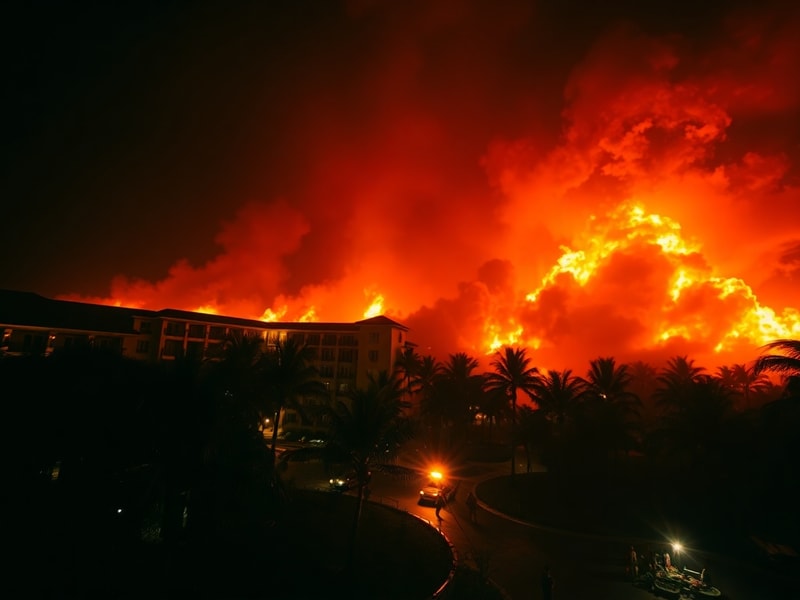
Resort fires in the Dominican Republic have become an alarming trend, drawing international concern over safety standards and emergency preparedness in the country’s booming tourism sector. In recent years, multiple incidents have raised questions about fire prevention measures, staff training, and infrastructure resilience at luxury resorts catering to millions of visitors annually. While the Caribbean nation remains a top destination for sun-seekers, these fires underscore the need for stricter oversight and accountability within the hospitality industry.
Recent Incidents and Their Aftermath
One of the most devastating fires occurred in early 2023 at the Dominican Republic’s Grand Bahia Principe La Romana, a sprawling resort complex that houses over 1,300 rooms. The blaze erupted in the early hours, forcing the evacuation of hundreds of guests, many of whom reported confusion and delayed responses from staff. Officials later attributed the fire to an electrical fault in the hotel’s basement, though investigations revealed that fire alarms and sprinkler systems in parts of the resort were either non-functional or improperly maintained.
The incident was not isolated. In 2022, a fire at the Hard Rock Hotel & Casino Punta Cana resulted in significant property damage, though thankfully no fatalities. These recurring events have prompted calls for systemic changes, including unannounced fire drills, mandatory equipment upgrades, and third-party safety audits. Local fire safety advocates argue that while the Dominican Republic’s tourism ministry has introduced new regulations, enforcement remains inconsistent, leaving many resorts operating below international safety standards.
Root Causes: Why Fires Keep Happening
A closer examination of these fires reveals a pattern of contributing factors:
- Outdated Infrastructure: Many resorts in the Dominican Republic were built decades ago, with electrical wiring and fire suppression systems that no longer meet modern safety codes. Renovation projects are often delayed due to cost-cutting measures or bureaucratic hurdles.
- Understaffed and Untrained Personnel: While resorts employ large teams, not all staff receive adequate fire safety training. In several incidents, employees failed to activate emergency protocols or guide guests to safety exits efficiently.
- Lax Enforcement of Regulations: Despite laws requiring regular inspections, corruption and limited resources have allowed some properties to slip through the cracks. In some cases, inspectors have been accused of accepting bribes to overlook violations.
- High Season Pressures: During peak tourist months, resorts operate at maximum capacity, straining resources and increasing the risk of electrical overloads or kitchen fires—common triggers in resort-related blazes.
Experts also point to the Dominican Republic’s tropical climate, which accelerates the wear and tear on electrical systems due to humidity and salt air corrosion. Without proactive maintenance, these systems become ticking time bombs, particularly in older structures.
The Human and Economic Toll
The consequences of resort fires extend far beyond property damage. Lives are at stake, as evidenced by near-misses in several incidents. In one case, a fire at the Bahia Principe complex could have been catastrophic had it spread to guest rooms, where many visitors were asleep. The psychological impact on tourists—who often travel to the Dominican Republic for relaxation and peace of mind—cannot be overstated. News of fires can deter future bookings, particularly among risk-averse travelers from North America and Europe.
Economically, the fallout is substantial. The tourism sector contributes nearly 20% of the Dominican Republic’s GDP, and resorts are the backbone of this industry. A single high-profile fire can lead to canceled reservations, legal liabilities, and reputational harm that lingers for years. The Grand Bahia Principe incident, for example, resulted in a temporary dip in tourism for La Romana, a region heavily dependent on resort revenue. Insurance premiums for properties in the area have also risen, increasing operational costs for hotel owners.
Government officials have responded with promises of reform. In 2023, the Ministry of Tourism announced a new safety certification program for resorts, requiring compliance with international fire safety standards. Properties that fail inspections will face fines or temporary closures. However, skepticism remains about whether these measures will be enforced uniformly, given the industry’s influence in Dominican politics.
What’s Next for Dominican Resort Safety?
The path forward requires a multi-faceted approach. First, resorts must invest in modernizing their infrastructure, prioritizing electrical systems, and installing state-of-the-art fire detection and suppression technology. This is not just a matter of compliance but of corporate responsibility, especially for brands that market their properties as luxurious and secure.
Second, training must become a non-negotiable priority. Staff at all levels—from housekeeping to management—should undergo rigorous fire safety drills, with certifications renewed annually. Simulated emergencies can help identify weaknesses in evacuation plans and improve response times. Some industry leaders have already taken this step voluntarily, setting a positive example for others to follow.
Third, transparency is key. Resorts should publicly disclose their safety records, including inspection reports and incident histories. Guests deserve the right to make informed decisions about their accommodations, particularly when traveling to destinations where safety standards may differ from their home countries. Websites and travel agencies could play a role by highlighting properties with strong safety credentials.
Finally, collaboration between the public and private sectors is essential. The Dominican government must allocate sufficient funding for fire departments, particularly in tourist-heavy regions where resources are often stretched thin. Meanwhile, international hotel chains operating in the country should leverage their global expertise to implement best practices locally.
The Dominican Republic’s reputation as a premier vacation destination hinges on its ability to address these challenges head-on. While the road to comprehensive safety reform will be long and complex, the stakes could not be higher. For a nation that relies so heavily on tourism, the cost of inaction is simply too great.