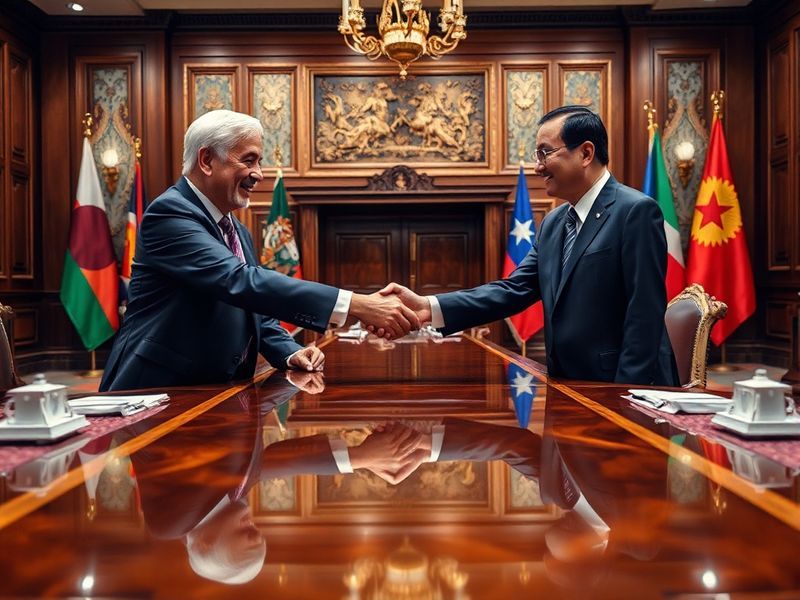
trade agreement
“`html
Understanding Trade Agreements: Benefits, Challenges, and Global Impact
Trade agreements shape the flow of goods, services, and capital across borders, acting as the backbone of international commerce. These legally binding treaties between two or more countries aim to reduce trade barriers, foster economic cooperation, and promote stability. Whether bilateral or multilateral, trade agreements influence everything from consumer prices to geopolitical alliances.
In recent decades, the number and complexity of trade agreements have surged. The World Trade Organization (WTO) currently monitors over 300 regional trade agreements—each designed to address specific economic needs and challenges. While some agreements focus on eliminating tariffs, others tackle intellectual property rights, labor standards, or environmental protections. The stakes are high: a well-crafted trade deal can boost GDP, create jobs, and enhance a nation’s global competitiveness. Conversely, poorly negotiated agreements can lead to job losses, weakened industries, and long-term economic imbalances.
As nations navigate an increasingly interconnected world, understanding the mechanics and implications of trade agreements becomes essential. This article explores their purpose, types, key examples, and the controversies surrounding them.
The Purpose and Structure of Trade Agreements
At their core, trade agreements are contracts that establish the rules for commerce between participating countries. Their primary goal is to facilitate smoother, more predictable trade flows by reducing tariffs, quotas, and other trade restrictions. Beyond economics, these agreements often include provisions on labor rights, environmental standards, and dispute resolution mechanisms.
Trade agreements typically fall into two broad categories: bilateral and multilateral. Bilateral agreements involve two countries, allowing them to tailor terms to their specific economic relationship. Multilateral agreements, such as the North American Free Trade Agreement (NAFTA) or the Comprehensive and Progressive Agreement for Trans-Pacific Partnership (CPTPP), involve three or more countries and aim to create larger, more integrated markets.
The structure of a trade agreement varies depending on its scope and participants. Most include the following key components:
- Market Access: Reductions or eliminations of tariffs and quotas on traded goods and services.
- Rules of Origin: Criteria that determine which goods qualify for preferential treatment under the agreement.
- Intellectual Property Protections: Standards for patents, copyrights, and trademarks to safeguard innovation.
- Dispute Settlement: Mechanisms for resolving conflicts between member countries without resorting to trade wars.
- Investment Provisions: Rules governing foreign direct investment and protection of investors’ rights.
These elements work together to create a framework that encourages cooperation while addressing the unique needs of each participant. For example, a country with a strong manufacturing sector may prioritize tariff reductions on industrial goods, while a nation rich in natural resources might focus on securing stable export markets.
Key Examples of Trade Agreements and Their Impact
Several trade agreements have left a significant mark on the global economy, reshaping industries and influencing diplomatic relations. One of the most well-known is the United States-Mexico-Canada Agreement (USMCA), which replaced NAFTA in 2020. USMCA introduced stricter labor and environmental provisions, modernized rules for digital trade, and updated automotive rules of origin to favor North American production.
The European Union (EU) is another prime example, operating as a single market with a unified trade policy. The EU’s customs union eliminates tariffs between member states while maintaining a common external tariff for non-EU countries. This arrangement has fostered deep economic integration, though it has also sparked debates about sovereignty and regulatory control.
In Asia, the Regional Comprehensive Economic Partnership (RCEP), signed in 2020, created the world’s largest free trade area. Encompassing 15 countries, including China, Japan, and South Korea, RCEP reduces tariffs on thousands of products and establishes common rules for e-commerce and intellectual property. Its impact is expected to be substantial, particularly in sectors like electronics, automotive, and agriculture.
While these agreements have driven growth, they have also faced criticism. For instance, USMCA’s labor provisions have been praised for improving wages in Mexico’s manufacturing sector but criticized for increasing costs for American businesses. Similarly, RCEP has raised concerns about China’s growing influence in the region and the potential marginalization of smaller economies.
The Controversies and Challenges Surrounding Trade Agreements
Despite their economic benefits, trade agreements are often contentious. One of the most persistent criticisms is that they disproportionately favor wealthier nations or multinational corporations at the expense of workers and smaller businesses. For example, critics argue that NAFTA contributed to job losses in the U.S. manufacturing sector as companies moved production to Mexico for lower labor costs.
Environmental groups frequently oppose trade deals that lack strong sustainability provisions. The Trans-Pacific Partnership, for instance, faced backlash for its perceived leniency toward fossil fuel industries and weak climate commitments. In response, modern agreements like the EU-Canada Comprehensive Economic and Trade Agreement (CETA) include binding environmental chapters to address these concerns.
Another challenge is the complexity of modern trade agreements. As they expand to cover topics beyond traditional trade barriers—such as labor rights, digital commerce, and climate change—they become harder to negotiate and implement. This complexity can lead to delays, as seen with the EU-Mercosur agreement, which has been under negotiation for over two decades due to disputes over agricultural subsidies and deforestation in the Amazon.
Political opposition also plays a significant role. Trade agreements often become lightning rods for broader debates about globalization, nationalism, and economic inequality. The 2016 Brexit referendum in the UK, driven in part by dissatisfaction with the EU’s trade policies, underscored how trade issues can intersect with national identity and sovereignty.
The Future of Trade Agreements in a Changing World
The landscape of international trade is evolving rapidly, shaped by technological advancements, geopolitical tensions, and shifting consumer demands. One of the most significant trends is the rise of digital trade agreements, which address issues like data localization, cross-border e-commerce, and artificial intelligence regulation. The Digital Economy Partnership Agreement (DEPA), signed by Singapore, Chile, and New Zealand, is a pioneering example of this trend.
Another emerging focus is sustainability. As climate change becomes an increasingly urgent issue, trade agreements are incorporating stronger environmental clauses. The EU’s Carbon Border Adjustment Mechanism (CBAM), for instance, aims to prevent carbon leakage by imposing tariffs on imports from countries with lax emissions standards. This policy could set a new standard for future trade deals.
Geopolitical rivalries are also reshaping trade dynamics. The U.S.-China trade war, which began in 2018, highlighted the risks of over-reliance on any single trading partner. In response, countries are diversifying their supply chains and forming new alliances. The Indo-Pacific Economic Framework (IPEF), launched by the U.S. in 2022, reflects this shift toward strategic economic partnerships that prioritize resilience and security alongside growth.
Looking ahead, trade agreements will likely continue to evolve in response to these challenges. The key will be balancing economic efficiency with social and environmental responsibility. Negotiators will need to address concerns about inequality, climate change, and digital privacy while ensuring that agreements remain flexible enough to adapt to future disruptions.
Conclusion
Trade agreements are more than just economic tools—they are instruments of global cooperation and competition. When designed thoughtfully, they can unlock new opportunities, drive innovation, and foster stability. However, their success depends on addressing the concerns of all stakeholders, from workers to environmental advocates, and ensuring that the benefits of trade are widely shared.
As the world becomes more interconnected, the role of trade agreements will only grow in importance. For policymakers, businesses, and consumers alike, staying informed about these agreements is crucial to navigating the complexities of the global economy. By fostering dialogue and collaboration, nations can harness the power of trade to build a more prosperous and sustainable future.
For those interested in exploring further, Dave’s Locker offers extensive coverage of trade policies and their global implications. Whether you’re a business owner, investor, or simply curious about international economics, understanding trade agreements is an essential step toward making informed decisions in an ever-changing world.
—
METADATA
{
“title”: “Trade Agreements Explained: Benefits, Challenges & Global Impact”,
“metaDescription”: “Learn how trade agreements shape economies and global relations, from USMCA to RCEP. Discover benefits, challenges, and future trends.”,
“categories”: [“Business”, “Analysis”],
“tags”: [“trade agreements”, “USMCA”, “RCEP”, “global trade”, “economic policy”],
“imageDescription”: “A split-view image showing a globe with connected trade routes on one side and a business meeting discussing documents on the other, with a modern, professional setting and soft lighting”
}
—END METADATA—
“`