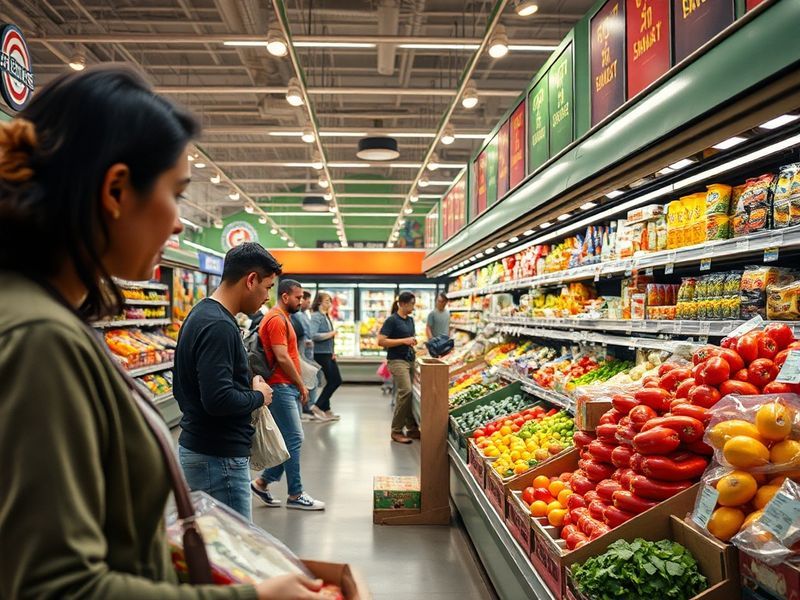
The grocery industry is undergoing rapid transformation, driven by economic pressures, technological advancements, and shifting consumer habits. From price fluctuations to supply chain disruptions, supermarkets are navigating uncharted territory. Below, we break down the most significant developments shaping how Americans shop for food.
Price Wars and Inflation: How Grocery Costs Are Evolving
Inflation has left its mark on grocery bills, with prices fluctuating month to month. Staples like eggs, dairy, and fresh produce have seen particularly volatile pricing trends. According to the U.S. Bureau of Labor Statistics, grocery prices rose 1.1% in the last quarter alone, though some categories—like cereal and bakery items—have stabilized.
Discount grocers like Aldi and Lidl are capitalizing on this uncertainty, expanding their footprint with aggressive pricing strategies. Meanwhile, traditional chains such as Kroger and Safeway are rolling out loyalty programs and digital coupons to retain budget-conscious shoppers. For consumers, the message is clear: comparison shopping is more critical than ever.
Private-label brands are also gaining traction. Store-owned alternatives to name-brand products now account for nearly 20% of sales at some supermarkets, offering quality at a lower cost. This shift reflects broader economic anxieties, as shoppers prioritize value without sacrificing quality.
Supply Chain Disruptions: When Will Shelves Stay Stocked?
The pandemic exposed vulnerabilities in global supply chains, and grocery stores are still feeling the aftershocks. Labor shortages, transportation bottlenecks, and geopolitical tensions continue to disrupt deliveries of everything from coffee beans to canned goods. The U.S. Department of Agriculture reports that delays in imported produce are now lasting up to three weeks longer than pre-2020 averages.
Regional grocers are adapting by sourcing locally where possible. Chains like Wegmans and Publix are investing in regional farms to reduce dependency on overseas suppliers. Some stores are even leasing their own warehouses to bypass third-party distributors entirely.
For shoppers, this means occasional empty shelves or limited selections—especially for imported or seasonal items. To mitigate frustration, many stores are implementing “rain checks” for out-of-stock products and updating inventory apps in real time. Still, experts warn that supply chain issues won’t fully resolve until 2025 at the earliest.
Tech Innovations: How Grocery Stores Are Getting Smarter
Technology is reshaping the grocery experience, from checkout to meal planning. Self-checkout kiosks, once a novelty, are now standard in 70% of U.S. supermarkets. Meanwhile, fully automated “grab-and-go” stores—like Amazon Fresh—are testing cashier-less shopping in urban markets.
Artificial intelligence is also playing a bigger role. Kroger’s partnership with Microsoft uses predictive analytics to optimize inventory and reduce waste. The system can forecast demand for perishable items within 48 hours, allowing stores to adjust orders dynamically. This not only cuts costs but also aligns with sustainability goals.
For online shoppers, innovations are just as impactful. Walmart’s new drone delivery service now promises 30-minute grocery drops in select neighborhoods, while Instacart’s “smart carts” use sensors to track items as they’re added, eliminating the need for manual scanning. These advancements cater to the 40% of consumers who now shop for groceries online at least once a month.
Sustainability Trends: What Shoppers Are Demanding
Environmental concerns are steering purchasing decisions more than ever. A recent Nielsen study found that 73% of shoppers are willing to pay more for sustainable brands, and grocers are responding. Whole Foods recently debuted a “Circular Market” in Brooklyn, where packaging is either compostable or reusable, and food waste is diverted to local farms.
Meat alternatives are another hot category. Beyond Meat and Impossible Foods have expanded their retail presence, with plant-based burgers now stocked in 90% of U.S. grocery stores. Even traditional chains like Tyson Foods are launching their own meat-free lines to meet demand.
For eco-conscious consumers, navigating these options can be overwhelming. Start by looking for third-party certifications like USDA Organic, Fair Trade, or Non-GMO Project Verified. These labels provide assurance that products meet strict environmental and ethical standards.
As grocers balance innovation with practicality, one thing is certain: the industry’s evolution will continue to shape how we shop, eat, and think about food. For the latest updates on grocery trends, check out our Trending section or dive deeper into food industry analysis.
Key Takeaways for Shoppers
- Compare prices: Use apps like Flipp or Honey to track deals across stores.
- Plan ahead: Check inventory apps before shopping to avoid wasted trips.
- Prioritize sustainability: Look for certified products and reduce single-use plastics where possible.
- Embrace tech: Try curbside pickup or drone delivery if available in your area.